For decades, workplaces were designed around a simple objective: efficiency.
More desks. More employees. More output.
The office was seen as a machine, and people were expected to fit into it.
Today, that mindset is rapidly changing.
As organisations compete for talent, innovation and long-term growth, a new understanding is emerging: workplace performance is deeply connected to workplace experience.
The environments where people work influence how they think, collaborate, solve problems and engage with one another. In many ways, the design of a workplace has become as important as the work itself.
The modern office is no longer just a place people go to complete tasks.
It is a place where culture is built, ideas are exchanged, and communities are formed.
This shift has become even more evident in a post-pandemic world. Remote work demonstrated that many tasks can be completed from almost anywhere. As a result, employees now expect more from the workplace than simply a desk and a meeting room.
If people are choosing to spend time in an office, the environment must offer something meaningful in return.
Connection. Collaboration. Comfort. Purpose.
The most successful workplaces understand this.
Rather than forcing people into rigid environments, they create conditions that support different ways of working. Focused work requires concentration and privacy. Creative work thrives on interaction and spontaneous conversations. Leadership requires visibility. Teams require opportunities to connect.
No single space can support all these needs equally.
The future workplace is therefore not defined by one type of environment, but by a variety of experiences working together.
This is where workplace design becomes a strategic tool rather than an aesthetic exercise.
Consider employee productivity.
Many organisations attempt to improve performance through technology, policies and training. While these factors matter, the physical environment often receives far less attention than it deserves.
Yet research consistently shows that access to natural light, air quality, acoustic comfort and ergonomic design significantly affect concentration, energy levels and overall job satisfaction.
A poorly designed office can drain energy before work even begins.
An effective workplace can quietly support performance throughout the day.
The difference is often invisible but powerful.
The conversation around workplace wellbeing is equally important.
For many professionals, a significant portion of their waking hours is spent at work. The workplace, therefore, has a direct influence on physical and mental well-being.
Long periods of sitting, excessive noise, lack of daylight and poorly planned environments contribute to stress and fatigue.
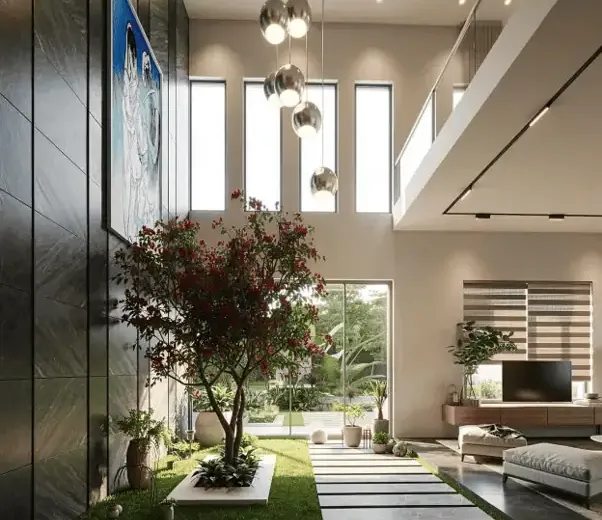
Conversely, workplaces that prioritise movement, natural light, greenery and social interaction create healthier and more positive experiences.
Well-being is no longer an employee benefit. It has become a business necessity.
Beyond productivity and wellbeing lies another critical factor: belonging.
People perform better when they feel connected to something larger than themselves.
A thoughtfully designed workplace can strengthen this connection by creating spaces that encourage interaction, mentorship and collaboration.
The most memorable offices are rarely defined by their furniture or finishes.
They are remembered for how they bring people together.
A shared café area where conversations spark new ideas.
A collaborative workspace where teams solve challenges together.
A quiet corner that offers a moment of focus during a busy day.
These experiences shape organisational culture far more than branding on a wall ever could.
At the same time, workplace design must respond to evolving societal expectations.
Today’s workforce values flexibility, inclusivity and balance. Employees increasingly seek environments that respect different working styles, support diverse needs and provide a sense of comfort without compromising professionalism.
The workplace of the future is not designed around hierarchy.
It is designed around people.
This represents a fundamental shift in how organisations think about space.
Success is no longer measured solely by occupancy rates or square footage efficiency.
It is measured by engagement, creativity, collaboration and long-term wellbeing.
At ArchiWing, we believe great workplace design begins with a simple understanding: people do their best work when they feel supported by their environment.
The goal is not merely to create offices.
The goal is to create environments where individuals can perform, collaborate and thrive.
Because the future of work is not just about where people work.
It is about how the places they work in help shape their potential.
As businesses continue to evolve, workplace design will play an increasingly important role in defining organisational success.
Not because buildings drive performance.
But because people do.
And the spaces we create have a profound influence on what people are capable of achieving together.