A luxurious living room is not necessarily defined by its size. Thoughtful layouts, carefully selected materials, balanced lighting and well-designed furniture can make even a compact apartment feel sophisticated and comfortable. In modern urban homes, where every square foot matters, creating an elegant living space requires a balance between aesthetics and functionality.
The secret is to make deliberate design choices rather than filling the room with expensive furniture or excessive decoration. From selecting the right colour palette to incorporating smart storage and layered lighting, several interior design techniques can help a small living room feel more spacious and refined.
Whether you are designing a new apartment or renovating an existing one, here are practical ways to create a premium-looking living room without compromising on comfort or usable space.
1. Choose a Sophisticated and Cohesive Colour Palette
Colour has a significant influence on how a room looks and feels. In a compact living room, a coordinated palette can create visual continuity and make the space appear more open.
Start with neutral shades such as warm white, beige, ivory, soft grey and greige. These colours create a calm foundation and work well with different furniture styles. Instead of introducing several contrasting colours, choose two or three complementary shades and repeat them across the walls, upholstery and decorative elements.
You can introduce depth through subtle accents such as:
- Muted gold or brass in lighting fixtures and hardware.
- Deep brown or walnut in wooden furniture.
- Olive green or muted blue in cushions and accessories.
- Textured beige or cream in curtains and upholstery.
A monochromatic colour scheme can also work beautifully. Using different tones of the same colour creates a layered appearance without making the room feel visually crowded.
The objective is to create a consistent visual flow where the walls, furniture and accessories complement one another.
2. Select Furniture That Matches the Room’s Proportions
One of the most common mistakes in compact apartments is choosing oversized furniture. A large sectional sofa, bulky armchairs or an unnecessarily wide centre table can restrict movement and make the living room feel smaller.
Instead, select furniture according to the available floor area and the way the room is used.
Consider these options:
- A streamlined two- or three-seater sofa with slim arms.
- Furniture with raised legs to create a sense of visual openness.
- Nesting tables that can be rearranged when required.
- A compact coffee table with concealed storage.
- Wall-mounted TV units instead of bulky floor-standing cabinets.
Before purchasing furniture, measure the room and prepare a basic layout. Allow comfortable circulation around the seating area, doors and other frequently used spaces.
Furniture should complement the architecture rather than dominate it. A carefully proportioned arrangement often looks more sophisticated than a room filled with large statement pieces.
3. Use Layered Lighting to Create an Elegant Atmosphere
Lighting can completely transform the appearance of a living room. A single bright ceiling light may provide basic illumination, but it rarely creates the depth and warmth associated with premium interiors.
A better approach is to combine three types of lighting.
Ambient lighting: Provides general illumination through ceiling lights, recessed fixtures or concealed cove lighting.
Task lighting: Supports specific activities through reading lamps, floor lamps or focused lighting near seating areas.
Accent lighting: Highlights architectural details, artwork, textured walls, shelving or decorative objects.
Warm or warm-neutral lighting can create a welcoming atmosphere, depending on the materials, colour palette and natural light available. Dimmers are particularly useful because they allow lighting intensity to change throughout the day.
For a more refined appearance, choose fixtures with simple forms and quality finishes. Well-positioned wall sconces, pendant lights and concealed LED strips can add character without occupying valuable floor space.
4. Incorporate Mirrors and Reflective Surfaces
Mirrors are an effective design element for creating the impression of greater space. They reflect available light and visually extend the room, making compact interiors feel less enclosed.
A large mirror placed opposite a window can help distribute natural light throughout the living area. Alternatively, a full-height mirror on a suitable wall can create a sense of additional depth.
Other reflective elements can also contribute to an elegant finish:
- Glass-top coffee tables.
- Polished metal accents.
- Gloss-finish decorative details.
- Mirrored cabinet panels used selectively.
However, avoid placing too many reflective surfaces together. The objective is to improve light distribution and visual openness, not to make the room appear overly shiny.
5. Invest in Custom Storage and Built-In Furniture
Storage is essential in smaller apartments because visible clutter can quickly make an otherwise beautiful room feel crowded.
Custom-designed storage helps use available space efficiently while maintaining a clean appearance. Instead of adding multiple standalone cabinets, consider integrating storage into the overall interior layout.
Some practical solutions include:
- Floating TV consoles with concealed compartments.
- Full-height cabinets with minimal handles.
- Window seating with built-in storage.
- Wall-mounted shelves for selected decorative objects.
- Multi-functional furniture with hidden storage.
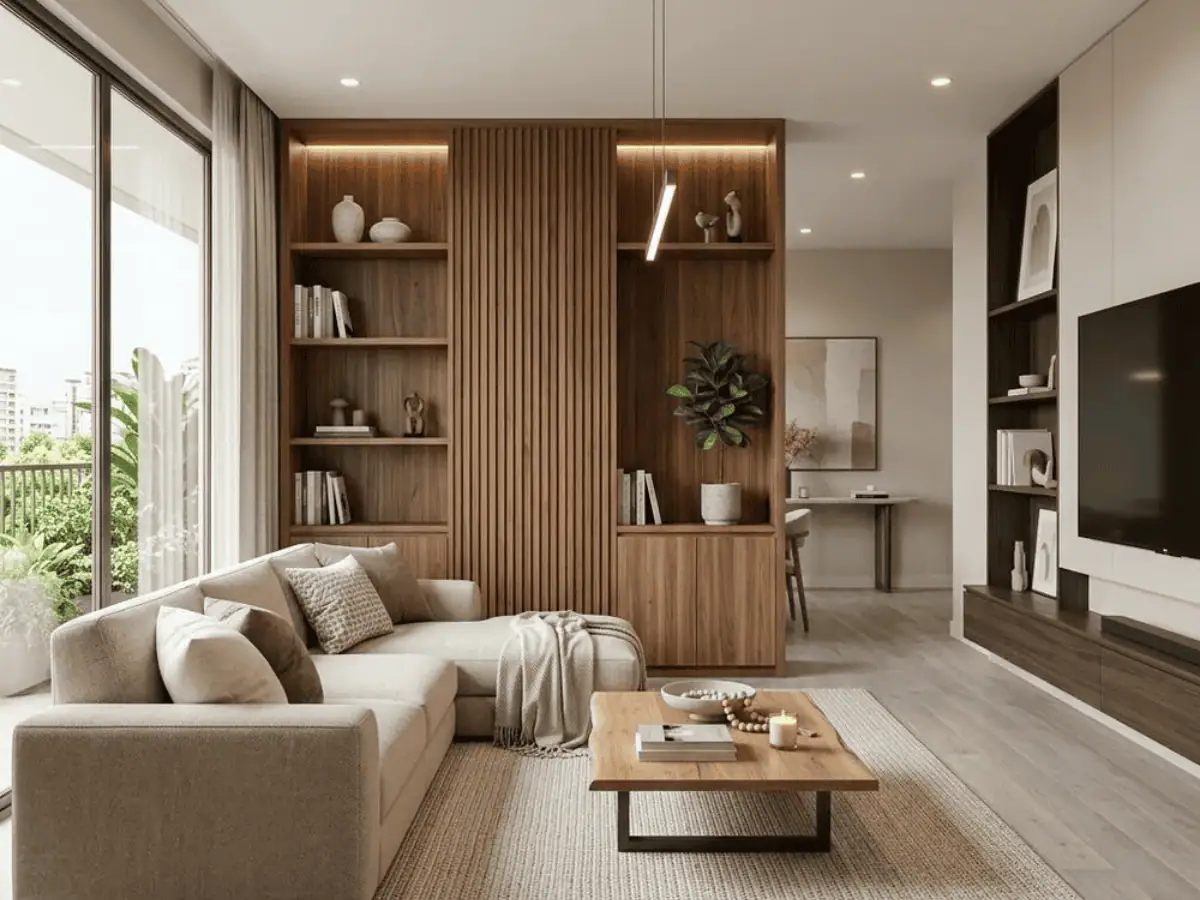
Built-in furniture can also help create a consistent visual language throughout the living room. Matching cabinet finishes, wall panels and furniture details make the interiors feel more thoughtfully designed.
The key is to balance closed storage with a few open display areas. This keeps everyday belongings out of sight while allowing selected books, artwork and accessories to contribute to the room’s personality.
When planning a new home, storage requirements and furniture dimensions should be considered alongside the broader construction process. Having the necessary documents and planning details organised before starting a house construction project can help homeowners coordinate different stages of residential development more effectively.
6. Choose Premium-Looking Materials and Textures
Luxury interiors are not always about expensive materials. The way different textures and finishes are combined often makes a greater difference.
For example, a neutral living room can feel considerably more sophisticated when it includes a combination of natural wood, textured upholstery, stone-inspired surfaces and subtle metallic details.
Consider incorporating:
- Wooden finishes for warmth and visual depth.
- Marble or quartz surfaces for a refined appearance.
- Linen or textured fabric for sofa upholstery.
- Fluted panels for architectural interest.
- Subtle wallpaper or textured wall finishes.
- Quality curtains with a natural drape.
Avoid using too many statement materials in one room. Choose one or two dominant finishes and complement them with simpler textures.
A consistent material palette helps create a cohesive interior that feels carefully planned rather than decorated in separate stages.
7. Use Curtains and Rugs to Define the Living Space
Soft furnishings play an important role in making a compact living room feel complete.
Floor-length curtains can create a sense of height, particularly when the curtain rod is installed closer to the ceiling. Lightweight fabrics allow natural light to enter while maintaining privacy.
Similarly, a well-sized area rug can visually define the seating arrangement without requiring physical partitions. Choose a rug that accommodates the main seating arrangement rather than one that looks disproportionately small.
Neutral rugs with subtle patterns, textured weaves or understated borders work well in contemporary interiors. Coordinate the rug with the sofa and curtains to maintain visual harmony.
These small details help connect different elements of the room and create a more finished appearance.
8. Create a Focal Point Without Overdecorating
Every well-designed living room benefits from a focal point. It gives the eye a place to settle and helps organise the overall composition.
In a compact apartment, the focal point could be:
- A thoughtfully designed TV feature wall.
- A statement artwork.
- A textured wall behind the sofa.
- A distinctive lighting fixture.
- A carefully styled shelving unit.
Choose one primary feature instead of introducing several competing elements. For example, if the TV wall has decorative stone or wooden panelling, keep the surrounding furniture and accessories relatively simple.
Artwork should also be proportionate to the wall. A well-positioned larger piece can sometimes look more refined than several small frames arranged without a clear visual plan.
9. Bring in Natural Elements and Thoughtful Accessories
A luxurious living room should feel welcoming, not like a showroom. Natural elements and carefully selected accessories help create that balance.
Indoor plants can introduce freshness and soften the appearance of furniture and architectural lines. Select plants according to available sunlight and maintenance requirements.
You can also introduce personality through:
- Ceramic or stone decorative objects.
- A small collection of coffee-table books.
- Minimalist vases.
- Textured cushions.
- Carefully selected artwork.
- Natural wood accessories.
Avoid filling every available surface with decorative items. Leaving some areas uncluttered gives individual elements more visual importance.
10. Plan the Layout Before Finalising the Interiors
A beautiful living room must also function well in everyday life. Before selecting materials or purchasing furniture, understand the room’s dimensions, window positions, natural light, electrical points and circulation requirements.
Consider how people will move through the space, where they will sit and how the living room connects with the dining area, balcony or kitchen.
Think about the placement of electrical outlets, lighting controls, television connections and air-conditioning provisions before finalising the furniture arrangement. These details can prevent unnecessary adjustments after the interiors are completed.
For larger residential projects, working with experienced luxury home architects Hyderabad can help bring architectural planning and interior aesthetics together in a cohesive way.
A well-planned design reduces unnecessary changes later and helps ensure that every element serves a clear purpose.
What Makes a Compact Living Room Look Luxurious?
A compact living room looks luxurious when its furniture, lighting, colours, materials and storage work together to create a balanced and uncluttered environment. The emphasis should be on quality, proportion, functionality and visual consistency rather than the number of decorative elements.
A thoughtfully designed layout, layered lighting, coordinated finishes and carefully selected furniture can create a premium atmosphere even when the available floor area is limited.
Create a Living Room That Reflects Your Lifestyle
Designing a compact apartment living room requires more than selecting attractive furniture and finishes. It involves understanding how the space will be used and translating those requirements into a practical, visually balanced design.
At Archi Wing Studio, we believe that good interior design brings together functionality, thoughtful material selection and architectural detailing. Whether you are planning a modern apartment or upgrading an existing living space, our team can help create interiors that make better use of every square foot.
Looking to transform your apartment into a thoughtfully designed living space? Connect with Archi Wing Studio to discuss your residential interior design requirements and explore a design approach that suits your space and lifestyle.
Frequently Asked Questions
1. How can I make a small apartment living room look expensive?
Choose a coordinated neutral colour palette, proportionate furniture, layered lighting and quality-looking materials. Add mirrors, concealed storage and a few carefully selected decorative elements to create a refined appearance without overcrowding the room.
2. Which colours are best for a luxurious small living room?
Warm white, beige, ivory, greige and soft grey are popular choices because they create a calm and visually spacious environment. You can introduce contrast through walnut wood, muted green, navy blue or subtle metallic accents.
3. What type of sofa is best for a compact apartment living room?
A two- or three-seater sofa with slim arms, compact dimensions and raised legs is often suitable. The ideal choice depends on the room’s measurements, seating requirements and circulation space.
4. How can lighting improve a small living room?
Layered lighting combines general illumination, task lighting and accent lighting to create depth and a comfortable atmosphere. Recessed lights, wall sconces, floor lamps and concealed LED strips can be used according to the layout.
5. Is custom furniture worth considering for a small apartment?
Yes. Custom furniture can be designed around specific room dimensions, storage requirements and circulation needs. Built-in cabinets, floating consoles and multi-functional furniture can help maximise usable space while maintaining a consistent interior style.