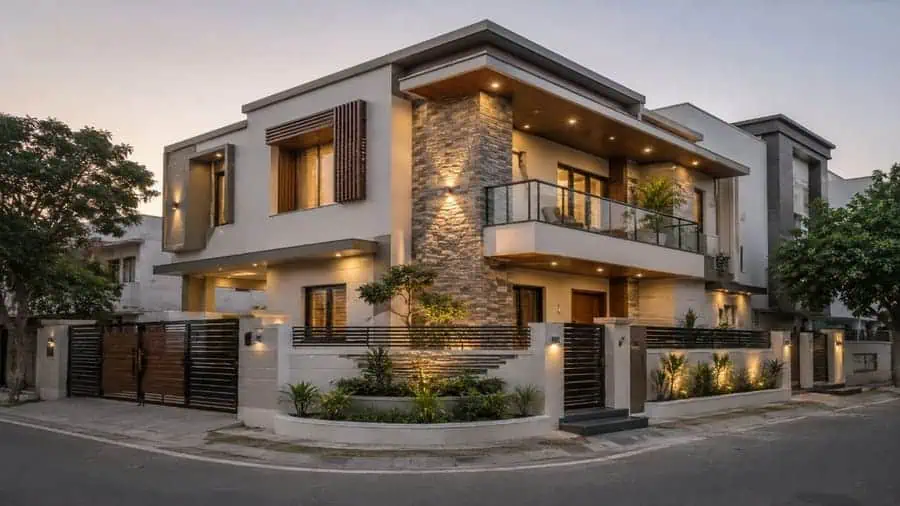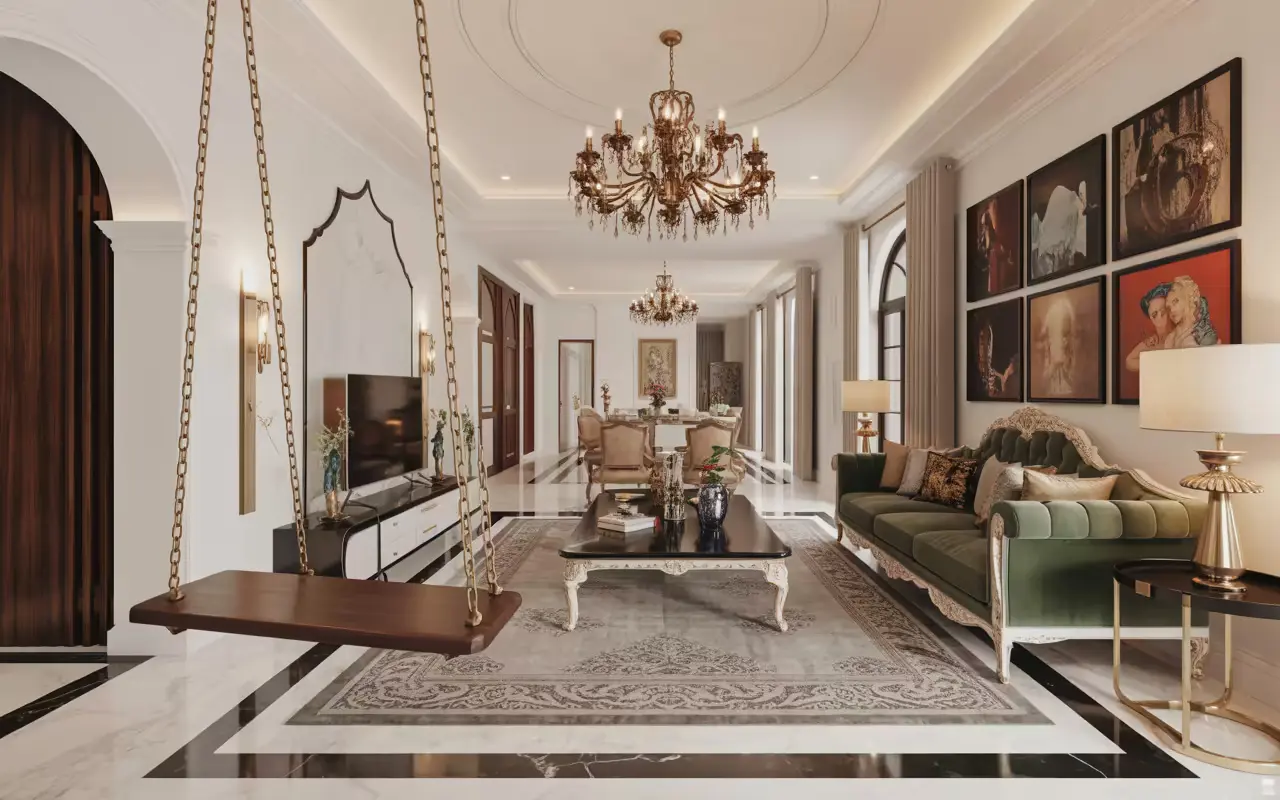
Interior design trends in India 2026 centre on natural materials such as stone, lime plaster and cane, calm earthy colours with soft whites, and flexible layouts built around wellbeing. Homes are moving away from heavy ornamentation towards warm, tactile, climate-smart spaces that still celebrate Indian craft.
Key takeaways
- Materials: natural stone, lime plaster, cane, terracotta and low-emission finishes
- Colours: soft whites, earthy clay and olive tones, with indigo or deep accents
- Spaces: flexible zones, ventilated kitchens, biophilic corners and storage-first planning
- Craft: handloom textiles and handmade surfaces layered into modern, minimal rooms
Indian homes are asked to do more than ever. A single apartment may serve as an office, a school, a gym and a family gathering place, all in the same week. The trends below respond to that reality, and to the climate, family structures and craft traditions that make Indian interiors different from those anywhere else.
What Is Shaping Interior Design in India in 2026?
Three forces are shaping Indian interiors this year: wellbeing, climate and craft.
Wellbeing means designing for calm, daylight, clean air and rest, not just for looks.
Climate matters because most of India deals with long, hot summers and humid monsoons, so breathable materials, cross-ventilation and shade are practical design decisions, not afterthoughts.
Craft is the third force: homeowners increasingly want handmade tiles, handloom fabrics and local stone, rather than a catalogue look that could belong to any city.
Together, these forces explain why 2026 interiors feel quieter, more natural and more personal than the high-gloss, ornate styles of the past decade.
Materials Defining Indian Interiors in 2026
Natural Stone and Lime Plaster
Indian stones are back in favour. Kota stone, a limestone from Rajasthan, is valued for hard-wearing floors, while Cuddapah limestone from Andhra Pradesh brings a deep, dark tone to floors, steps and countertops. Stone floors also feel cooler underfoot in summer, which suits Indian homes.
On walls, lime plaster is making a comeback. It is breathable, meaning it allows moisture to pass through, and it gives a soft, slightly textured finish that flat paint cannot match.
Wood, Cane and Bamboo
Warm timber tones remain central, but the treatment is lighter. Engineered wood with natural veneers keeps costs and weight manageable, while cane webbing is appearing on wardrobe shutters, headboards, partitions and chairs. Bamboo is also gaining ground because it grows quickly and renews faster than most hardwoods.
Terrazzo, Terracotta and Handcrafted Surfaces
Terrazzo, made from marble or stone chips set in cement or resin, is used on floors, tabletops and bathroom surfaces for its durability and subtle pattern. Terracotta tiles, perforated jaali screens and handmade ceramics add texture and a sense of place, especially in dining areas, balconies and entryways.
Low-VOC Paints and Responsible Finishes
Volatile organic compounds (VOCs) are chemicals released by some paints, adhesives and boards, and they can affect indoor air quality. In 2026, more homeowners are asking for low-VOC paints and low-emission boards, particularly for bedrooms and children’s rooms.
Colour Palettes Shaping Indian Homes in 2026
Soft Whites with Cloud Dancer
Pantone, the global colour authority, named Cloud Dancer (PANTONE 11-4201) its Colour of the Year for 2026, the first time in the programme’s history that a white has been chosen. It is a soft, airy white that works well as a calm base in Indian apartments, where light-reflecting walls help small rooms feel larger.
Earth Tones: Clay, Ochre and Olive
Terracotta, warm clay, ochre and muted olive or sage greens pair naturally with stone, cane and timber. They bring warmth without the heaviness of dark, saturated colours and suit both traditional and contemporary homes.
Indigo and Deep Accents
Indigo has a long history in Indian textiles, and it now appears in cushions, rugs, accent walls and cabinetry. Used sparingly, it adds depth against soft neutrals. A simple rule of thumb is roughly 60% base colour, 30% secondary and 10% accent.
Spatial Ideas for Indian Homes in 2026
Flexible, Multi-Use Zones
Foldable desks, sliding partitions and jaali-style screens let one room switch between work, study and relaxation without permanent walls. Built-in seating with storage underneath is especially useful in compact city apartments.
Kitchens That Handle Indian Cooking
Frying, tempering and long cooking times create heat, oil and strong aromas. That is why many homeowners are choosing a semi-open kitchen or a wet-and-dry kitchen split, supported by a properly sized chimney and good ventilation, so the main living area stays fresh.
Biophilic Balconies and Light-Filled Corners
Biophilic design means bringing natural elements into the home. In India, that often means planters on balconies, a green corner near a window, or a small courtyard-style space that brings in light and air, since daylight and greenery are widely linked to better mood and comfort.
Pooja Units, Storage and Multigenerational Comfort
Integrated pooja units, vertical storage and wider circulation paths are becoming standard in thoughtfully planned homes. For families with elders, non-slip flooring, softer corners and easy-to-reach storage make daily life safer. These are the kind of personal details we focus on when designing bespoke private residences around a family’s rituals and routines.
Layered Lighting
Good lighting is built in three layers: ambient lighting for the whole room, task lighting for reading, cooking or work, and accent lighting to highlight art or textures. Warm white light (around 2700K to 3000K) is generally recommended for living and bedroom areas.
Indian Craft Meets Contemporary Design
The most memorable 2026 interiors blend modern layouts with regional craft. Pochampally ikat from Telangana, which is registered as a Geographical Indication (GI) with the Government of India, and Kalamkari from Andhra Pradesh and Telangana work well as cushions, upholstery or a single feature wall. One handcrafted piece in a calm, minimal room usually has more impact than many decorative items competing for attention.
How to Apply Interior Design Trends in India 2026 in Your Home
- Start with how you live. List how each room is used every day before choosing finishes.
- Pick two or three hero materials. For example, Kota stone, cane and lime plaster, repeated across rooms for continuity.
- Keep the palette tight. One soft base, one earthy secondary and one accent is enough.
- Plan storage and lighting first. They are harder and costlier to fix after the work is done.
- Choose the right professional. If you are shortlisting interior designers in Hyderabad, ask how they handle local climate, material sourcing and site coordination, not just how polished their 3D renders look.
At Archi Wing Studio, our interior design work begins with these everyday questions, so that the finished space looks good and also works for the people living in it.
Frequently Asked Questions
What are the biggest interior design trends in India in 2026?
The biggest trends are natural materials like stone, lime plaster and cane, soft earthy colour palettes, flexible multi-use layouts, biophilic elements and low-VOC finishes. Handcrafted Indian textiles and surfaces are also being blended into minimal, modern spaces.
Which colours are trending for Indian homes in 2026?
Soft whites such as Pantone’s Cloud Dancer, along with terracotta, clay, ochre and olive tones, are leading. Indigo and other deep shades are popular as accents on cushions, rugs, cabinetry or a single feature wall.
Which materials suit the Indian climate best?
Stone such as Kota or Cuddapah limestone, lime plaster, terracotta, cane and bamboo suit India’s hot and humid conditions because they feel cooler, breathe better or resist heat well. Good ventilation and proper sealing of timber and cane are equally important.
How can I make a small Indian apartment feel bigger?
Use light, reflective wall colours, continuous flooring, built-in storage and multi-use furniture. Layered lighting and a clear, uncluttered circulation path also make compact rooms feel more open.
Can traditional Indian elements work in a modern home?
Yes. The most effective approach is to keep the layout and palette simple, then add a few handcrafted pieces such as ikat upholstery, a jaali screen or terracotta accents, so tradition acts as a highlight rather than clutter.
If you are planning a new home or a renovation this year, the Archi Wing Studio team in Gachibowli would be glad to talk through your ideas. Call +91 98858 23482 or write to projects@archiwingstudio.com to book a design consultation.