
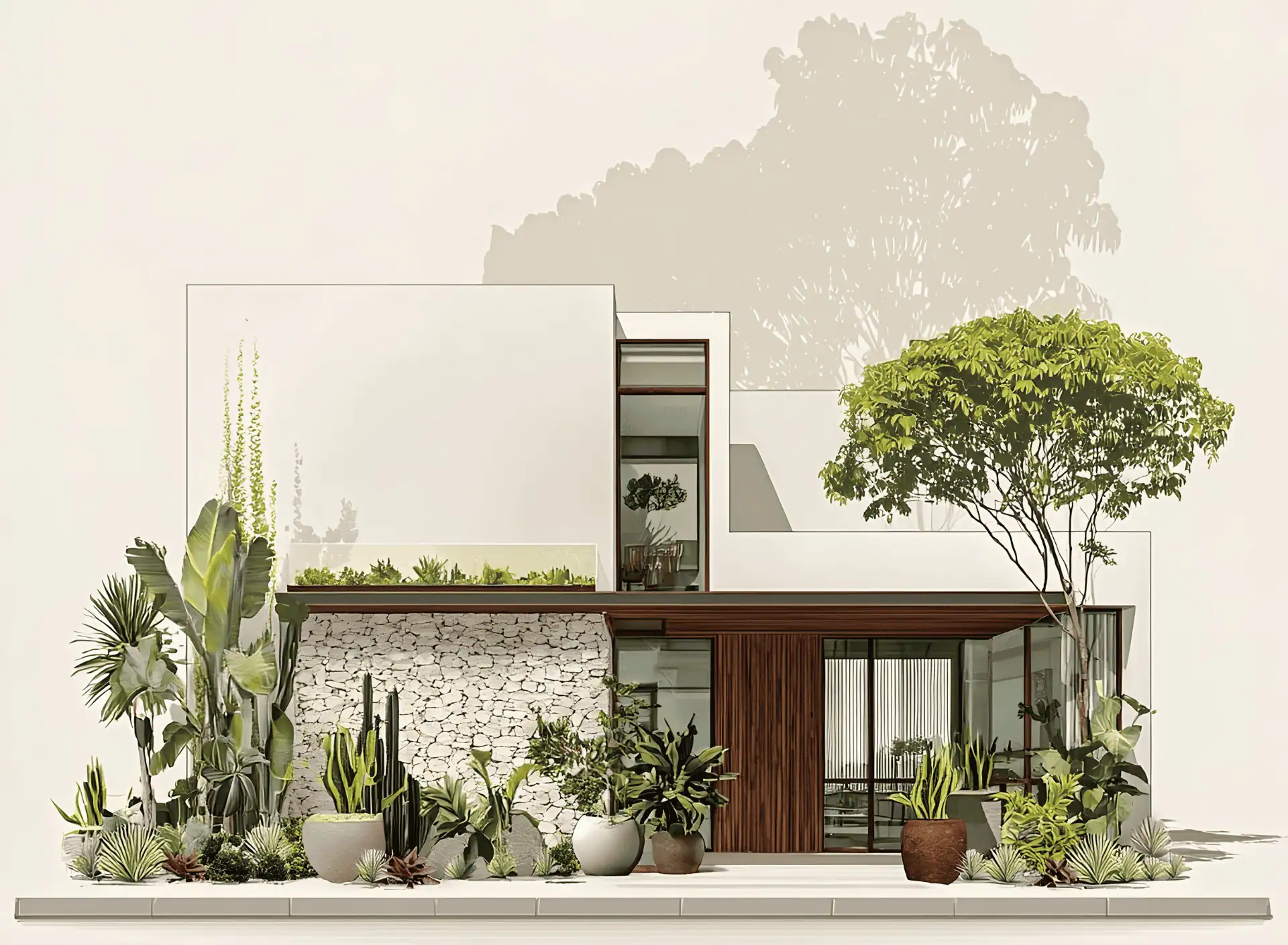
A house can be beautiful and still not feel like home.
It can have premium finishes, expansive spaces and carefully curated interiors, yet somehow feel incomplete. On the other hand, some homes leave a lasting impression not because of how they look, but because of how they make people feel.
Comfortable. Connected. Calm. Alive.
This raises an interesting question: what actually makes a house feel like home?
The answer has less to do with aesthetics than we often think.
For decades, residential architecture has largely focused on form, functionality and visual appeal. While these remain important, a growing body of research and design thinking points towards something deeper. The most successful homes are not simply designed for living. They are designed for wellbeing.
A home is where life unfolds.
It is where families gather after long days, where children grow up, where milestones are celebrated and where people seek comfort during difficult times. More than any other building type, the home has a profound influence on emotional well-being.
Yet many modern homes are designed around rooms rather than relationships.
The result is often a collection of beautiful spaces that function independently but fail to create meaningful connections between the people living within them.
Great residential architecture starts by understanding human behaviour.
How do families interact?
Where do conversations naturally happen?
When do people seek privacy?
How can a space support both togetherness and solitude?
These questions often matter more than the choice of materials or finishes.
One of the most overlooked aspects of wellness design is natural light.
People are instinctively drawn to daylight. It influences mood, energy levels and even sleep quality. A home that welcomes natural light throughout the day often feels more vibrant and uplifting than one that relies heavily on artificial lighting.
Similarly, our connection to nature plays a significant role in how we experience a space.
Views of greenery, courtyards, gardens, terraces and natural ventilation create moments of calm in our increasingly busy lives. This is one reason why people often feel more relaxed in homes that blur the boundaries between indoors and outdoors.
The relationship between space and wellbeing extends beyond comfort.
It also influences behaviour.
A thoughtfully positioned dining area can encourage families to spend more time together.
A shaded outdoor space can become a daily gathering point.
A reading nook can offer moments of quiet reflection.
These seemingly small design decisions shape routines, relationships and experiences over time.
In many ways, a home quietly teaches us how to live within it.
The challenge with modern home design is that it often prioritises visual trends over long-term human needs.
Open plans become fashionable.
Large spaces become desirable.
Certain materials become symbols of luxury.
But trends evolve.
Human needs remain remarkably consistent.
People need connection.
People need comfort.
People need privacy.
People need access to light, air and nature.
People need spaces that adapt as life changes.
A young couple’s needs are different from those of a growing family. Likewise, the requirements of a multi-generational household differ significantly from those of a retired couple. The most successful homes are not rigid. They are flexible enough to evolve alongside the people who inhabit them.
This is where residential architecture becomes more than the design of buildings.
It becomes the design of everyday experiences.
At ArchiWing, we believe a home should support wellbeing in its broadest sense. Not only physical comfort, but emotional connection, mental clarity and a sense of belonging.
Because the true measure of a home is not how impressive it appears on day one.
It is how it supports life over the years that follow.
The memories created around a dining table.
The conversations were shared on a veranda.
The quiet moments near a window filled with morning light.
These experiences are rarely reflected in floor plans, yet they are often what people remember most.
Perhaps that is what makes a house feel like home.
Not its size. Not its style. Not its price.
But its ability to nurture the people who live within it.
As the future of residential design continues to evolve, the conversation must move beyond aesthetics alone. The homes of tomorrow should not simply look better.
They should help people live better.
Because when architecture is designed around human wellbeing, a house becomes more than a place to live.
It becomes a place to belong.


3 Comments
Alice Johnson
Sed ut mauris turpis. Etiam tortor sapien, vestibulum nec nulla et, malesuada commodo sem. Ut suscipit maximus quam, vel volutpat nibh ultricies eget. Nunc quis mollis dolor, vitae pellentesque ligula. Aliquam pretium porttitor risus, eget lobortis tortor facilisis quis. Curabitur imperdiet leo id purus euismod, faucibus maximus massa sodales. Etiam lobortis varius lobortis.
Charlie Green
Quisque at tortor purus. Cras ut molestie risus. Donec non tellus ut elit lacinia dapibus. Suspendisse faucibus ante dui, nec luctus est pretium et. Curabitur et orci non urna ullamcorper sollicitudin quis lacinia arcu. Nunc quam diam, dictum ut nisi quis, venenatis facilisis odio. Nullam nec venenatis neque, nec sagittis dui. Vestibulum aliquet non nisl et gravida.
anti-violence-26470
[866332]supplies professional anti-violence equipments and solutions for the whole world with strong and perfect production capacity. anti-violence.org