Flooring is one of the most important decisions when designing or renovating a home. It influences the overall appearance of an interior, affects everyday comfort and determines how easily different spaces can be maintained. In Indian homes, flooring also needs to accommodate changing temperatures, dust, humidity, frequent use and different household requirements.
Among the many available flooring materials, marble, vitrified tiles and wood remain popular choices. Each offers distinct advantages in terms of appearance, durability, maintenance and suitability for different rooms.
Marble is known for its natural patterns and elegant finish, vitrified tiles offer versatility and practicality, while wood flooring brings warmth and a more natural character to residential interiors. However, choosing between them requires more than comparing their appearance or initial cost.
The right flooring material depends on the room’s purpose, local climate, household lifestyle, installation requirements and overall interior design.
This guide explores the differences between marble, vitrified and wood flooring to help homeowners make informed decisions for their residential spaces.
Which Flooring Is Best for Indian Homes?
Vitrified tiles are a practical all-round flooring choice for many Indian homes because they offer low water absorption, a wide range of designs and relatively easy maintenance. However, marble can be a better choice for homeowners who prefer natural stone aesthetics, while engineered wood is suitable for spaces where warmth and comfort are important.
There is no single flooring material that is ideal for every room. A living room may benefit from marble or large-format vitrified tiles, whereas a bedroom may feel more comfortable with engineered wood.
Understanding the characteristics of each material helps homeowners select flooring that balances appearance, functionality and long-term maintenance.
1. Marble Flooring: Natural Elegance and Timeless Appeal
Marble is a natural stone formed when limestone undergoes heat and pressure over geological periods. It is valued for its distinctive veining, natural colour variations and polished appearance.
In Indian residential architecture, marble is frequently used in living rooms, entrance foyers, staircases and other prominent areas. Its natural patterns create a distinctive appearance that works well with both traditional and contemporary interior styles.
Different varieties of marble are available in white, beige, green, brown and grey shades. The final appearance depends on the stone variety, finish, slab selection and installation pattern.
Advantages of Marble Flooring
- Elegant appearance: Natural veining and colour variations give marble a distinctive, premium finish.
- Long service life: Properly selected, installed and maintained marble can remain functional for many years.
- Naturally cool surface: Marble generally feels cool underfoot, which can be comfortable in warmer parts of India.
- Unique patterns: Natural variations make each slab visually different.
- Design flexibility: Different colours and finishes can complement a wide range of interior styles.
Disadvantages of Marble Flooring
- Higher initial investment: Premium marble, transportation, cutting, installation and polishing can increase project costs.
- Maintenance requirements: Some varieties benefit from periodic sealing and specialised cleaning.
- Stain and etching sensitivity: Calcium-carbonate-based marble can react with acidic substances such as lemon juice and vinegar.
- Surface scratches: Dust, abrasive particles and heavy furniture can affect the polished surface.
- Installation expertise: Incorrect levelling, joint treatment or polishing can affect the final finish.
Where Is Marble Flooring Most Suitable?
Marble is particularly suitable for:
- Living rooms and formal drawing rooms.
- Entrance foyers and passageways.
- Staircases and selected feature areas.
- Large residential spaces where natural stone patterns can become a design element.
For kitchens and bathrooms, the specific stone, surface finish, water exposure and slip resistance should be carefully evaluated before installation.
2. Vitrified Tile Flooring: Practicality and Design Versatility
Vitrified tiles are manufactured ceramic tiles produced through a process that creates a dense, low-porosity body. They are widely used in Indian homes because of their design variety, relatively low water absorption and ease of maintenance.
Porcelain tiles are a category of vitrified ceramic tiles generally characterised by water absorption of 0.5% or less.
Homeowners can choose from glossy, matte, satin, textured and stone-inspired finishes. Wood-look and marble-look vitrified tiles are also available for people who want the appearance of natural materials with the characteristics of manufactured tiles.
Advantages of Vitrified Tile Flooring
- Low water absorption: Good-quality vitrified tiles absorb relatively little water, making them suitable for many residential applications.
- Easy maintenance: Regular sweeping and mopping are generally sufficient for routine cleaning.
- Design variety: Available in different colours, sizes, textures and patterns.
- Consistent appearance: Manufactured tiles offer more predictable colour and pattern distribution than natural stone.
- Durability: Quality products can withstand regular household foot traffic when installed correctly.
- Multiple surface finishes: Matte and textured options can provide better traction than polished surfaces when appropriately specified.
Disadvantages of Vitrified Tile Flooring
- Hard surface: Tiles may feel uncomfortable when standing for extended periods.
- Cold underfoot: They can feel cold during winter, particularly in northern parts of India.
- Grout maintenance: Grout joints can collect dirt and require periodic cleaning.
- Replacement challenges: Finding an identical replacement for discontinued designs may be difficult.
- Slipperiness: Certain polished finishes can become slippery when wet.
Where Are Vitrified Tiles Most Suitable?
Vitrified tiles work well in:
- Living rooms and dining areas.
- Bedrooms and passageways.
- Kitchens and utility areas.
- Apartments and independent houses.
- Selected bathrooms and balconies with suitable anti-slip products.
For wet areas, homeowners should prioritise appropriate slip resistance rather than choosing tiles solely on the basis of colour or appearance.
3. Wood Flooring: Warmth and Comfort for Residential Interiors
Wood flooring introduces a natural, warm character into residential spaces. Its textures and shades can make a room feel more inviting while complementing contemporary, minimalist and traditional interior designs.
It is commonly used in bedrooms, private lounges, home offices and selected living areas.
However, not every wood-based flooring product is made from solid timber. Understanding the differences between solid hardwood, engineered wood and laminate is important before making a decision.
Types of Wood Flooring
Solid Hardwood Flooring
Solid hardwood flooring is manufactured from a single piece of natural timber. Depending on its thickness and condition, it can be sanded and refinished multiple times.
However, solid wood is sensitive to moisture and humidity changes. Proper installation and indoor environmental conditions are important for maintaining its stability.
Engineered Wood Flooring
Engineered wood consists of a real wood surface layer attached to a layered core. Its construction generally provides greater dimensional stability than solid hardwood when indoor humidity changes.
It can be a suitable option for bedrooms and selected residential spaces, provided the product is appropriate for the intended application.
Laminate Flooring
Laminate flooring is a manufactured product designed to imitate the appearance of natural wood. It typically contains a fibreboard-based core, a decorative image layer and a protective wear layer.
It is often more affordable than natural hardwood. However, conventional laminate should not be considered waterproof, and prolonged exposure to moisture can damage its core.
Advantages of Wood Flooring
- Warm appearance: Natural wood shades create a comfortable and welcoming atmosphere.
- Comfort underfoot: Wood generally feels warmer than marble and ceramic tiles.
- Design flexibility: Different wood species, colours and patterns complement various interior styles.
- Refinishing potential: Certain solid and engineered wood products can be refinished depending on their construction.
- Suitable for private spaces: Wood can create a relaxing atmosphere in bedrooms and study areas.
Disadvantages of Wood Flooring
- Moisture sensitivity: Excessive water and humidity can cause swelling, warping or other damage.
- Maintenance requirements: Scratches and surface wear may require repairs or refinishing.
- Installation considerations: Subfloor preparation and expansion gaps are important.
- Limited wet-area suitability: Conventional wood products are generally unsuitable for bathrooms and frequently wet spaces.
- Product quality differences: Performance varies between solid wood, engineered wood and laminate.
Where Is Wood Flooring Most Suitable?
Wood flooring can work particularly well in:
- Master bedrooms and guest bedrooms.
- Home offices and study rooms.
- Reading corners and private lounges.
- Selected living areas with controlled indoor conditions.
For areas exposed to frequent moisture, alternative flooring materials are generally more practical.
4. Marble vs Vitrified vs Wood Flooring: Key Differences
Comparing the three materials across important performance factors makes it easier to identify which option suits a particular residential project.
Material and Appearance
- Marble: Natural stone with distinctive veining and colour variations.
- Vitrified tiles: Manufactured ceramic material available in numerous colours, textures and patterns.
- Wood: Natural timber or manufactured wood-based flooring that creates a warm appearance.
Initial Cost
- Marble: Costs vary depending on the stone variety, quality, transportation and installation. Premium varieties can be expensive.
- Vitrified tiles: Available across different price ranges depending on size, finish, brand and quality.
- Wood: Costs depend on whether homeowners select solid hardwood, engineered wood or laminate.
Water Resistance
- Marble: Porosity varies by stone type, and appropriate sealing and maintenance may be necessary.
- Vitrified tiles: Generally have low water absorption, although installation and grout joints also matter.
- Wood: Moisture resistance depends on the product. Conventional wood flooring should not be treated as waterproof.
Maintenance Requirements
- Marble: Requires suitable cleaning products and may need periodic sealing.
- Vitrified tiles: Generally require less specialised maintenance.
- Wood: Requires careful cleaning and protection from excessive moisture and scratches.
Comfort and Durability
- Marble: Hard and naturally cool underfoot. Its durability depends on the stone variety and maintenance.
- Vitrified tiles: Hard and potentially cold, with performance depending on tile specifications and installation.
- Wood: Generally feels warmer and more comfortable, although surface durability varies by product and finish.
Each material has its own advantages. The final selection should be based on the specific room, expected usage and overall residential design.
5. Which Flooring Is Best for Different Rooms?
Selecting the same flooring material for every room may not always be the most practical approach. Each space has different requirements in terms of moisture exposure, foot traffic, comfort and cleaning.
Living Room: Marble or Vitrified Tiles
Living rooms are frequently used for family activities and entertaining guests. Flooring should therefore balance appearance, durability and maintenance.
Marble can create an elegant visual impression, particularly in larger spaces. Large-format vitrified tiles are another practical option for contemporary apartments and independent homes.
The choice should complement furniture, wall finishes, lighting and the overall interior theme.
Bedroom: Wood or Vitrified Tiles
Bedrooms benefit from flooring that creates a comfortable and relaxing environment.
Engineered wood can introduce warmth and texture, making it an attractive option for private spaces. Vitrified tiles are also suitable for homeowners who prioritise easy cleaning and a consistent finish.
Kitchen: Vitrified Tiles
Kitchen flooring needs to withstand spills, frequent cleaning, food stains and regular movement.
Good-quality vitrified tiles with a suitable slip-resistant finish are generally a practical choice. Grout selection and installation quality should also be considered.
Bathroom: Anti-Slip Flooring
Bathrooms experience frequent water exposure, so slip resistance should be a primary consideration.
Choose flooring products specifically suitable for wet areas. Textured or appropriately rated anti-slip tiles are generally more suitable than highly polished surfaces.
Balcony and Utility Areas: Outdoor-Suitable Tiles
Balconies and utility spaces may experience rain, sunlight and temperature variations.
Select tiles designed for the intended outdoor application. Water absorption, slip resistance, drainage and weather exposure should all be evaluated before installation.
6. Important Factors to Consider Before Choosing Flooring
Flooring decisions should consider more than the appearance and purchase price of a material.
Climate and Humidity
India experiences different climatic conditions, from humid coastal regions to hot, dry areas and colder northern states.
Marble and vitrified tiles are generally suitable for a wide range of indoor conditions. Wood flooring requires greater attention to moisture control and humidity changes.
In humid regions, engineered wood may offer better dimensional stability than solid hardwood, but the product must still be selected according to the manufacturer’s installation requirements.
Budget and Long-Term Costs
The total flooring budget should include more than the material price.
Consider:
- Material cost and cutting wastage.
- Transportation and handling.
- Subfloor preparation and levelling.
- Installation labour.
- Adhesives, grout and finishing materials.
- Polishing or protective treatments.
- Future maintenance and repairs.
A lower initial price does not necessarily mean a lower overall cost throughout the flooring’s service life.
Slip Resistance and Household Safety
Flooring should provide suitable traction for its intended application.
Highly polished surfaces may become slippery when wet. This is particularly important in bathrooms, kitchens, balconies and homes occupied by children or older adults.
Always check the manufacturer’s slip-resistance information and select a finish appropriate for the room.
Interior Design and Furniture Planning
Flooring should complement the wall colours, furniture, lighting and architectural character of a home.
Light-coloured flooring can help create a visually open appearance in smaller rooms, while darker wood finishes can introduce depth and warmth.
Natural lighting, room proportions and transitions between connected spaces should also influence the final selection.
Installation Quality
Even high-quality flooring can develop problems when installation is not carried out correctly.
Proper subfloor preparation, levelling, adhesive selection, joint treatment and expansion gaps where required all contribute to the final result.
Flooring specifications should ideally be finalised during the architectural and interior design process rather than being treated as a last-minute finishing decision.
7. How Flooring Choices Influence Residential Architecture
Flooring is not an isolated interior design element. It contributes to the visual continuity, functionality and overall experience of a home.
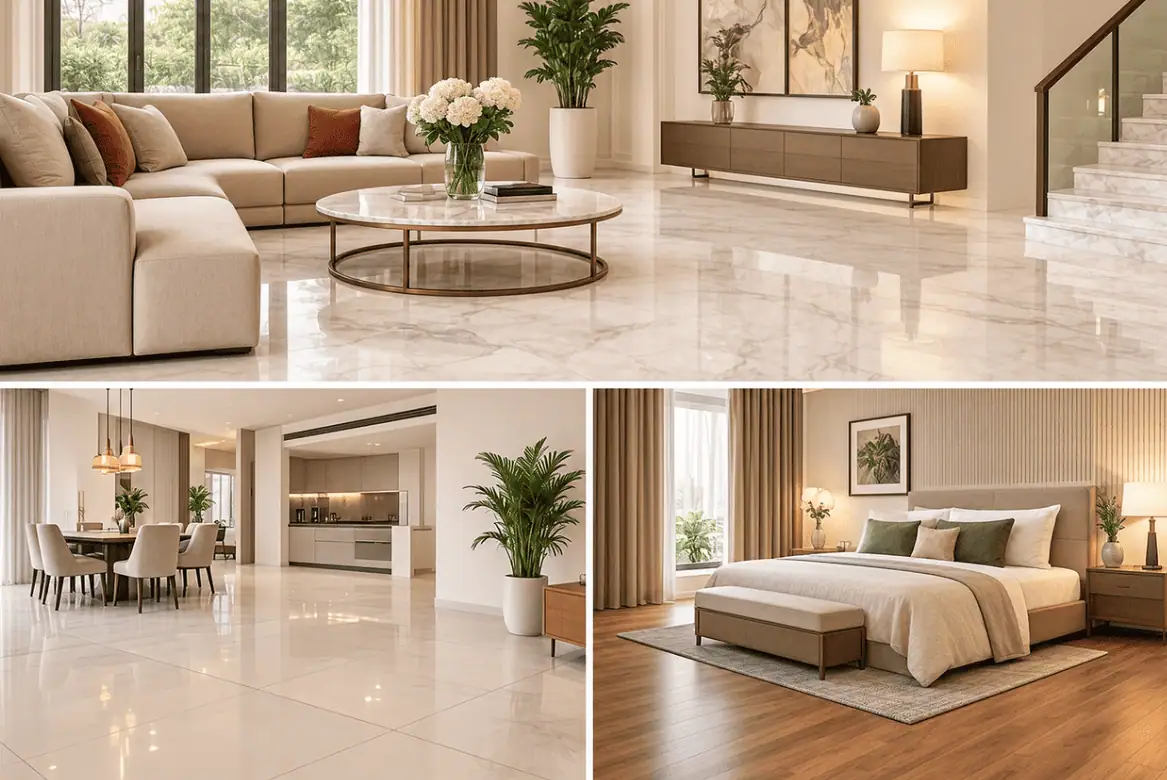
For example, an open-plan living and dining area may benefit from consistent flooring that creates a seamless appearance. A villa may use marble in formal spaces and engineered wood in private areas to establish different moods.
Architects and interior designers also consider the relationship between flooring and:
- Room dimensions and floor levels.
- Natural lighting and ventilation.
- Furniture placement and circulation.
- Door clearances and skirting details.
- Wet-area waterproofing and drainage.
- Indoor and outdoor transitions.
- Maintenance and long-term usability.
In larger residential developments, high-rise residential architects Hyderabad must also coordinate material specifications with building services, structural requirements, circulation and the overall architectural design.
The flooring material should therefore be selected as part of a complete design approach. Archi Wing Studio’s interior design approach considers layouts, materials, lighting and furniture in relation to how people actually use their spaces.
For homeowners planning a new house, understanding the architectural decisions involved in residential design can also help create a more coordinated relationship between the building structure and its interiors.
8. Flooring Maintenance: How to Protect Different Materials
Regular maintenance helps preserve the appearance and functionality of flooring.
Marble Flooring Maintenance
- Use a soft mop and a suitable pH-neutral stone cleaner.
- Avoid acidic products such as vinegar and lemon-based cleaners.
- Wipe spills promptly to reduce staining and etching.
- Follow the stone supplier’s recommendations for sealing.
- Avoid dragging heavy furniture directly across the surface.
The Natural Stone Institute provides useful care and cleaning recommendations for natural stone, including advice on cleaning products and stain prevention.
Vitrified Tile Maintenance
- Sweep or vacuum regularly to remove dust and abrasive particles.
- Mop using a suitable floor cleaner.
- Clean grout joints periodically.
- Use protective pads beneath heavy furniture.
- Address loose tiles or damaged grout promptly.
Wood Flooring Maintenance
- Use a dry or slightly damp mop according to the manufacturer’s instructions.
- Clean spills immediately.
- Avoid excessive water during cleaning.
- Maintain suitable indoor humidity where required.
- Use protective furniture pads to minimise scratches.
- Follow product-specific recommendations for polishing and refinishing.
9. Final Verdict: Which Flooring Should You Choose?
The best flooring depends on your household’s priorities, budget and the purpose of each room.
Here is a simple selection guide:
- For a luxurious natural appearance: Choose marble.
- For everyday practicality: Consider vitrified tiles.
- For easier routine maintenance: Vitrified tiles are a practical option.
- For warm and comfortable bedrooms: Consider engineered wood.
- For natural patterns and variations: Marble is an excellent choice.
- For a wide range of colours and finishes: Vitrified tiles offer greater variety.
- For a combination of traditional and contemporary aesthetics: All three materials can work, depending on the design.
For many Indian homes, good-quality vitrified tiles offer a practical balance of durability, design flexibility and maintenance. Marble is an excellent option when natural stone aesthetics are important, while engineered wood can enhance bedrooms and selected private spaces.
Homeowners can also combine different materials according to the purpose of each room. For example, marble in the living room, vitrified tiles in the kitchen and engineered wood in the bedrooms can create a balanced material palette.
Ultimately, the best flooring is one that complements the architecture, supports everyday activities and remains practical to maintain over time.
Frequently Asked Questions
1. Which flooring is best for Indian homes: marble or vitrified tiles?
Both have their advantages. Marble offers natural patterns and an elegant appearance, while vitrified tiles provide design flexibility, low water absorption and relatively easy maintenance. Vitrified tiles are a practical all-round option for many Indian households.
2. Is vitrified flooring better than marble for daily use?
Vitrified flooring is generally easier to maintain and has lower water absorption than marble. It is suitable for many frequently used residential spaces. However, marble can also perform well with appropriate installation and maintenance.
3. Is wood flooring suitable for Indian weather conditions?
Yes, wood flooring can be used in Indian homes when the product is selected according to local climate and indoor conditions. Engineered wood generally offers better dimensional stability than solid hardwood, but neither should be considered waterproof.
4. Which flooring is best for bedrooms in Indian homes?
Engineered wood is a suitable option for homeowners who prefer a warm and comfortable bedroom environment. Vitrified tiles are another practical choice because they are easy to clean and available in different finishes.
5. Can marble, vitrified tiles and wood flooring be combined in one house?
Yes. Combining different flooring materials can create visually distinct and functional spaces. For example, marble can be used in the living room, vitrified tiles in the kitchen and engineered wood in the bedrooms. Floor levels, material thickness and transitions should be planned during the design stage.
Plan Your Home with Thoughtful Material Selection
The right flooring can make a significant difference to the appearance, comfort and functionality of a home. Whether you prefer the natural beauty of marble, the versatility of vitrified tiles or the warmth of wood, every material should be selected according to the space and its everyday requirements.
At Archi Wing Studio, thoughtful architectural and interior design brings together aesthetics, functionality and practical material choices. If you are planning a new home or renovating an existing space, connect with Archi Wing Studio to explore architectural and interior design solutions that reflect your lifestyle.