
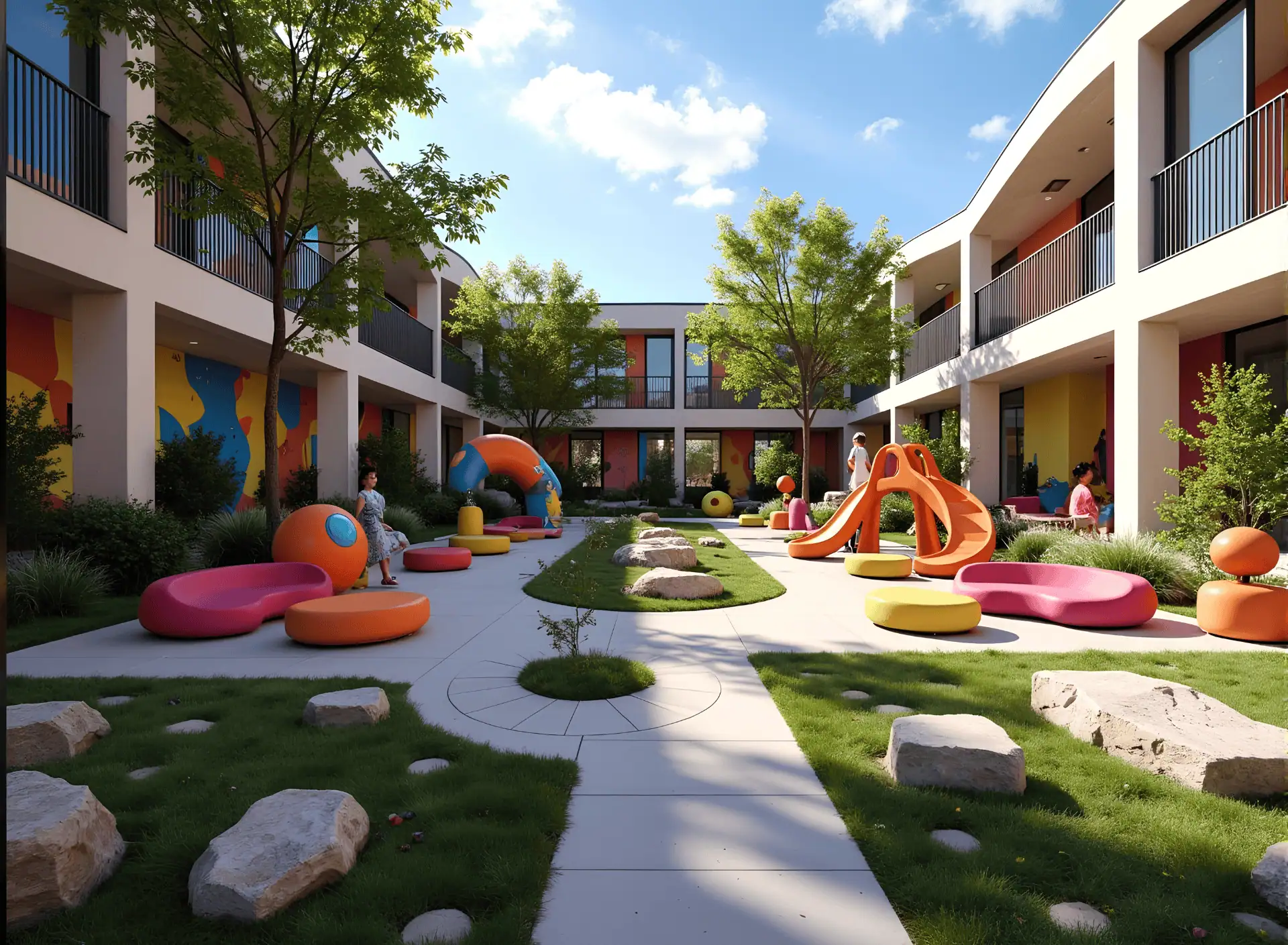
Every school teaches. But not every school inspires.
When we think about education, we often focus on curriculum, teachers and technology. While these elements are undoubtedly important, there is another factor that quietly shapes the learning experience every day: the environment itself.
The spaces where students learn influence how they think, interact, focus and grow.
A well-designed learning environment can encourage curiosity, foster collaboration and improve engagement. A poorly designed one can limit participation, increase distractions and make learning feel like a task rather than a journey.
The truth is, educational spaces are never neutral. They are active participants in the learning process.
For decades, school design followed a relatively standard model: rows of desks, enclosed classrooms and corridors connecting one room to another. This approach prioritised organisation and efficiency, but often overlooked how students actually learn.
Today’s educational landscape is different.
Learning is no longer confined to a classroom. It happens through discussion, exploration, teamwork, experimentation and experience. As teaching methods evolve, educational design must evolve alongside them.
The most effective schools are no longer designed around subjects.
They are designed around learners. Curiosity is at the heart of education. Yet curiosity cannot be forced.
It thrives in environments that encourage exploration and discovery.
A student is far more likely to engage with their surroundings when spaces feel inviting, adaptable and stimulating. Access to natural light, visual connections to outdoor spaces and opportunities for informal interaction can transform the educational experience.
When students enjoy being in a space, they are more likely to participate in what happens within it.
This is where school architecture becomes more than a functional requirement.
It becomes a tool for engagement. Another critical aspect of educational design is flexibility.
The future classroom cannot be designed for a single teaching style. Different activities require different environments. A lecture, a group discussion, a creative workshop and an independent study session all demand unique spatial conditions.
Schools that provide adaptable learning spaces allow educators to tailor environments to the needs of the moment.
In doing so, they create richer and more dynamic learning experiences. Learning is also a social process.
Students learn not only from teachers but from one another. The spaces between classrooms often become just as important as the classrooms themselves. Courtyards, shared learning zones, libraries, and informal gathering spaces create opportunities for collaboration, conversation and peer-to-peer learning.
Some of the most valuable lessons are learned outside formal teaching environments.
Good design recognises this. Well-being is another factor gaining increasing attention in educational architecture.
Students spend a significant portion of their day in school environments. Factors such as ventilation, daylight, acoustics and thermal comfort directly affect concentration, mood and cognitive performance.
A noisy classroom can make learning difficult. A poorly ventilated room can reduce focus.
An environment lacking connection to nature can feel restrictive and uninspiring. Designing for well-being is not an additional feature. It is fundamental to creating spaces where students can perform at their best.
The role of schools is also expanding. Educational institutions are increasingly becoming community hubs that support cultural, social and extracurricular activities. This requires school design to be more inclusive, accessible and adaptable than ever before.
The most successful educational environments serve not only students but the wider communities around them. They become places of connection, growth and shared experiences.
At ArchiWing, we believe learning spaces should do more than accommodate education.
They should actively support it. Every design decision from the layout of a classroom to the placement of a courtyard—has the potential to influence how students engage, collaborate and develop. Because education is ultimately about shaping futures. And the environments where learning takes place play a powerful role in shaping those outcomes.
The schools of tomorrow will not be defined by the size of their buildings or the sophistication of their facilities. They will be defined by their ability to inspire curiosity, encourage exploration and create meaningful learning experiences.
Because when educational spaces are designed around people rather than processes, learning becomes more than the transfer of knowledge.
It becomes an experience that empowers individuals to grow, discover and thrive.


2 Comments
Alice Johnson
Donec rutrum nibh quis molestie blandit. Suspendisse id nisi at enim imperdiet convallis. Donec sodales tellus et leo sagittis, eu consectetur turpis porta. Phasellus diam quam, ullamcorper ut mattis varius, interdum vitae augue. Vestibulum pulvinar massa libero. Praesent ultrices dignissim tortor quis tincidunt. Vestibulum ac dignissim nibh.
Jane Smith
Maecenas facilisis egestas lacus, eu pulvinar nunc varius dapibus. Nunc velit nulla, vestibulum vitae volutpat sed, ultrices id nisi. Fusce id tristique ipsum. Nunc tincidunt mi in dui tincidunt, at maximus ipsum consequat. Cras nec dolor feugiat, ultrices leo nec, posuere tortor. Pellentesque commodo tortor eget rutrum eleifend.